Search This Blog

Monday, April 13, 2009

The Snorting Gazelle


Speke's gazelles were named after John Speke, an African explorer who looked for the source of the Nile, but ended up naming a bird, a rodent, and an antelope. Speke's are endangered, and the wild numbers are estimated in the low ten thousands. They are found in small, fragmented populations in the horn of Africa, (Somalia and Ethiopia). The largest threat to their survival is the loss of grazing due to the encroachment of livestock.

This little female Speke's gazelle was born at the Jacksonville Zoo and Gardens last week. She is getting a daily catch-up and weighing (she is around three pounds; the scale reads in metric) for the first week of life, following a protocol established by the St. Louis Zoo.

Only four founding animals had been imported into this country in the late 60's and early 70's, so the resulting inbreeding led to problems including low birth weights, lack of viability, and low fertility. In the 1980's, under guidance of the SSP (Species Survival Plan) the St. Louis Zoo instituted a risky, but critically important program to rapidly breed all of the animals, to produce a large number of offspring, quickly. Over one hundred Speke's gazelles have been born at the St. Louis Zoo. Those with fatal defects did not survive, but the others had not inherited the harmful genes. The plan worked and over two to three generations, the problems had largely disappeared.

The most noticeable feature of this nearly two foot tall antelope is the three to five folds of skin that form the bridge of the nose. This can be inflated into a resonating chamber for the loud, explosive gunshot sneeze that the gazelle uses in alarm. It is also thought to be used to help in cooling because Speke's gazelles live in hot, dry semi-desert habitat. They are also crepuscular (active at dawn and dusk) to help conserve moisture.

Both sexes have S shaped horns, but the male's is noticeably heavier at the base. The gestation is six to seven months and the single, (rarely twin) offspring is weaned at two to three months, Their lifespan is twelve years.

Our little female is staying in an off-exhibit area that is visible from the train. She is often hidden in the grass (a protection defense to avoid predation), but has already started playing, and "pronking" about the yard, with all four feet raised off of the ground in a series of high bounds (also adaptive, to escape predation when being chased).

Photos by Jacksonville Zoo and Gardens

Saturday, April 11, 2009

Elvira Jaguar: Mistress of the Night

Martin Main, Ph.D., from the University of Florida, and Ph.D graduate student, Emiliano Ramalho, study jaguars in a flooded rainforest in central Brazil. Jaguars are nocturnal, elusive and solitary, and little is know about their population density. The Amazon basin is critical to jaguar conservation because it holds the greatest numbers of animals. The Amazon contains large stretches of intact habitat that communicates with other important ecosystems.

Main's team captured the beautiful female jaguar pictured above on Halloween, 2008. Fittingly, she was named "Elvira," and fitted with a GPS collar that will record her location every two hours for a year. The data collected will establish her range and movement with the change in water levels that flood up to 36 feet every year. (The area is so inundated that Mr. Ramalho stays in a floating research camp.)

Typically, infrared "camera traps" are used to photograph and identify individual free-ranging wild animals. Scat (feces) is also collected to study prey species eaten. The jaguar is a top predator that also takes domestic stock, and is killed by ranchers and villagers. Mitigating jaguar/human conflict will become a primary concern of conservationists, as the human population is ever increasing in central Brazil.

Dr. Main is also looking at other, complimentary techniques to camera trapping and radio collaring. Another student has done trials at the The Jacksonville Zoo and Gardens with non-invasive collection of hairs, which will provide DNA material that will provide information on parentage and familial relationships.

For further information:
http://international.ifas.ufl.edu/focus_newsletters/2009/February2009/Jaguar.shtml

Photo by M. Main

Wednesday, April 8, 2009

A Prickle of a Porcupine

This photo is of a young brush-tailed African porcupine. Newborns are precocial, being well-developed, but of small size. They are born with soft hair that hardens over a week or two. This animal weighed about a pound, and already had the quill development of an adult. The brush-tailed porcupine is not well known outside of west and central Africa where it ranges, because it is rarely seen in captivity. An adult weighs six to eight pounds, while the better known black and white African crested porcupine is much larger, at 40 to 60 pounds.

Unlike its name "porcupine" which means "quill pig," porcupines are not pigs, but rodents. Due to their taste for roots and tubers, they have a light, sweet meat that is favored by local populations, and they are frequently hunted. In Zaire, porcupines were flushed by dogs, to be captured by small hoop nets on the trails that the animals would use as escape routes.

The meat is so favored that one project in Gabon has tried farm raising brush-tailed porcupines, with limited success. The fact that they only produce one or two offspring, with a relatively long gestation of 100 or more days is not promising for efficient production (compared to rabbits, for example, that can produce 6 to 10 young after only a one month gestation).

The brush-tailed porcupine has short quills and a tuft of flattened, pale quills at the end of its tail. Like all porcupines, its defensive behavior is to turn around, stamp its front feet and raise and shake the quills to produce a menacing rattle and increase its body "size." The animal will also hiss, and growl. Finally, if the aggressor is not convinced, the porcupine will back up rapidly and ram the offender, leaving some quills behind.

The brush-tailed porcupine lives in burrows, and is strictly nocturnal. It travels in small family groups and is mostly terrestrial, but can climb, or swim, with webbed feet. In researching the natural history of the species, the most interesting fact I uncovered was that a group of porcupines is called a "prickle," an apropos description for such an unusual evolutionary survival tactic.

Photo by D. Messinger

Monday, April 6, 2009

Telecel Bon Voyage

To make ends meet, Kizito and I created ads for Telecel, a telecommunications company. At that time, in the mid 1990's, Telecel ran a monopoly in the capital, and did not really need to advertise. But Jim Galan, the American director, had a soft spot for our conservation projects and orphaned bonobos. He paid for a dozen one page cartoons and then hired us to manage the postings in the local newspapers.

This four color ad fit in with the "social marketing" that we used for our copy. Each told a good story, gave some interesting lesson (here, it was geography), and advanced our overall goal of creating interest in reading.

In Bon Voyage, TELECEL, a jumbo jet is deplaning passengers. The first pane announces, "A tropical morning....the arrival from Europe." Then we see a man, dressed in a puffy jacket with a Topeka Zoo and happy face patches, waving good-by to the air hostesses, "See you next time, my dears!"

In the crush of passengers, he exclaims, "AWESOME! HO! My brother is here!"

The two meet, the loud bother greeting the conservatively dressed brother with, "What's up, Bro?"

They hug, and the brother asks, "How was the trip?" "FANTASTIC!" (The man likes to talk in capital letters.)

The next scene is a depiction of the crazy hubbub at the Kinshasa airport, where the two brothers are seen as tiny figures in the background, laughing.

In the third row, left pane, the two are waiting for their baggage. The loud brother throws out his arms, "I was in London, Madrid, Athens, New Delhi, Paris, Brussels...!!"

He continues, admonishing his stay at home brother, "...you need to get out and breathe the air of progress in exotic places, isn't that so, brother!?! His brother raises one eyebrow and responds softly, "Maybe..."

While the loud brother is laughing in an uproar, we notice the other brother's hand holding a cellular telephone that suddenly begins ringing, "Lo lo lo lo! Lo lo lo lo!"

A finger punches a button, while the loud brother, tears still in his eye from laughing, shows surprise on his face.

The quiet brother answers the phone, saying, "Hello... Los Angeles?... O.K.! I'll call Singapore immediately to confirm... Good bye!"

The loud brother, eyes wider, listens to this conversation. Then, with a broad wink, the quiet brother says, "You see, brother... I travel too, with TELECEL!"

Saturday, April 4, 2009

The Animals in Our Lives

These cats, from the left, are Kiki, Hurricane, Momacita, and Halloween, a mother and three daughters. They are Sphynx, a hairless breed developed from a natural mutation in a few barn kittens found in Toronto, in the 1970's. An unusual fact about felines is that their skin reflects the color of the fur, which can be easily seen in the Sphynx. In our case, we have tortoiseshells, blue (grey), and calico varieties.

Besides the felines, we have a Doberman and a mixed American bulldog that was rescued from the pound. The cats and dogs get along, and make for a happy, healthy family. Scientific studies conducted by the Centers for Disease Control have shown that pets decrease the incidence and severity of depression, reduces heart disease and lowers levels of LDL ("bad" cholesterol).

The American Veterinary Medical Association has reported that the elderly in nursing homes with well-cared for resident animals have less infections, fewer hospitalizations, and 30% lower staff turnover than homes without animals.

Pets are a marvelous way for humans to build character. They increase opportunities for exercise and serve as an ice breaker for conversation. Pets teach selflessness, responsibility, love, sharing, biology, life, and death. For children, the death of a pet teaches coping skills for the loss of human life.

Pets allow us to see the world through rose colored glasses. Who is the best secret keeper, always happy to see you, and loves you unconditionally? Your pet, of course.

At times we all need a bright spot in our lives when the general outlook becomes cloudy with the demands of work, school, children, finances, and trying to hold it all together. Animals are the bright spot -- a dog cheers us up when he lays his head in our lap, and we relax when a cat curls up and purrs like a motor.

What can you do if you don't have the ability, desire, or resources to have a pet of your own? You can reap benefits by volunteering at the local shelter, interacting with a neighbor's pet, or watching animals in nature. Animals are natural teachers, and even butterflies and other insects have fascinating lives that reveal themselves with close observation.

Whether feathered, scaled, furry, slimy, or (in some cases), hairless, animals enhance our lives. If nothing else, upload an aquarium screen saver on your computer monitor and watch the fish swim.

Photo by M. Brickner

Wednesday, April 1, 2009

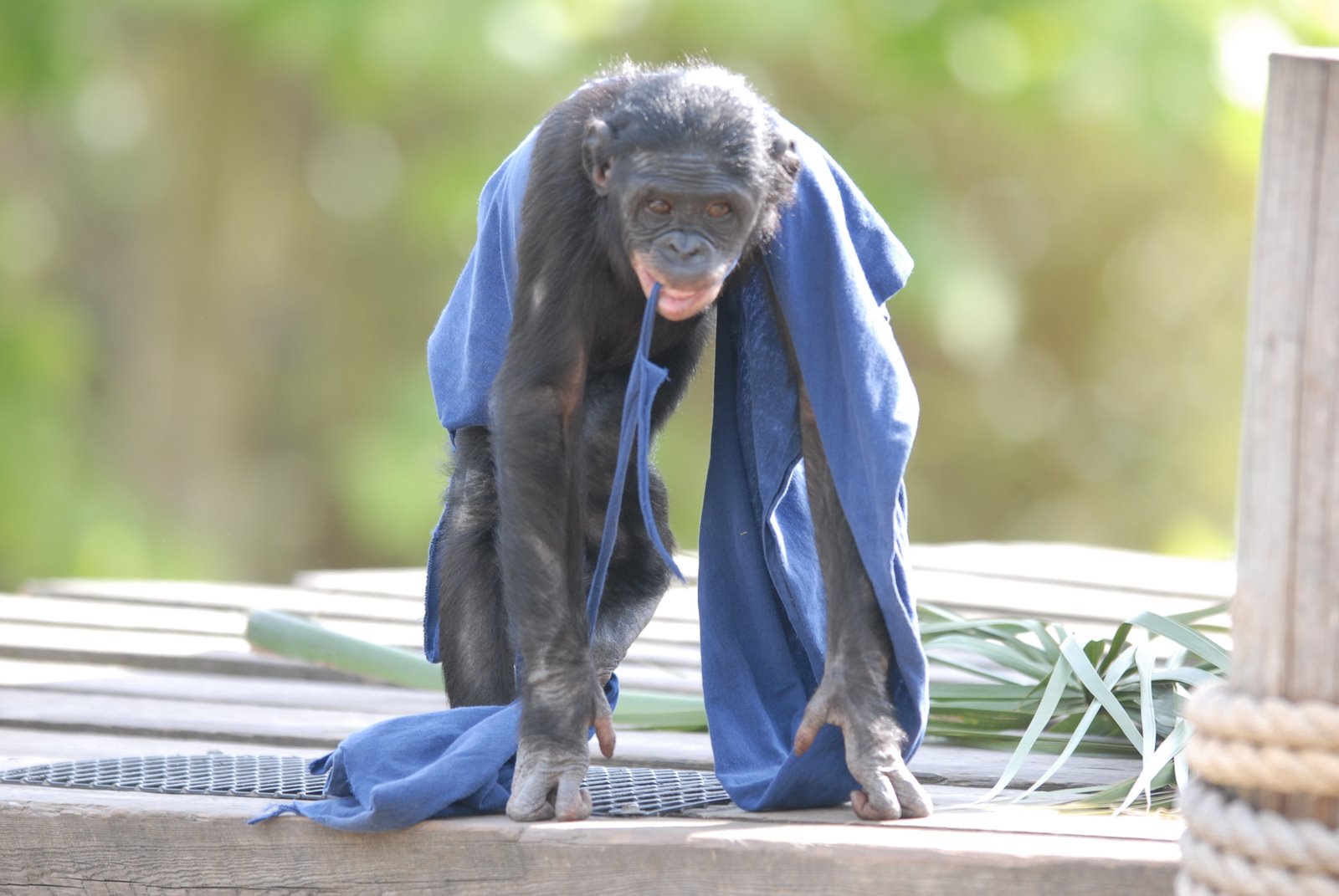
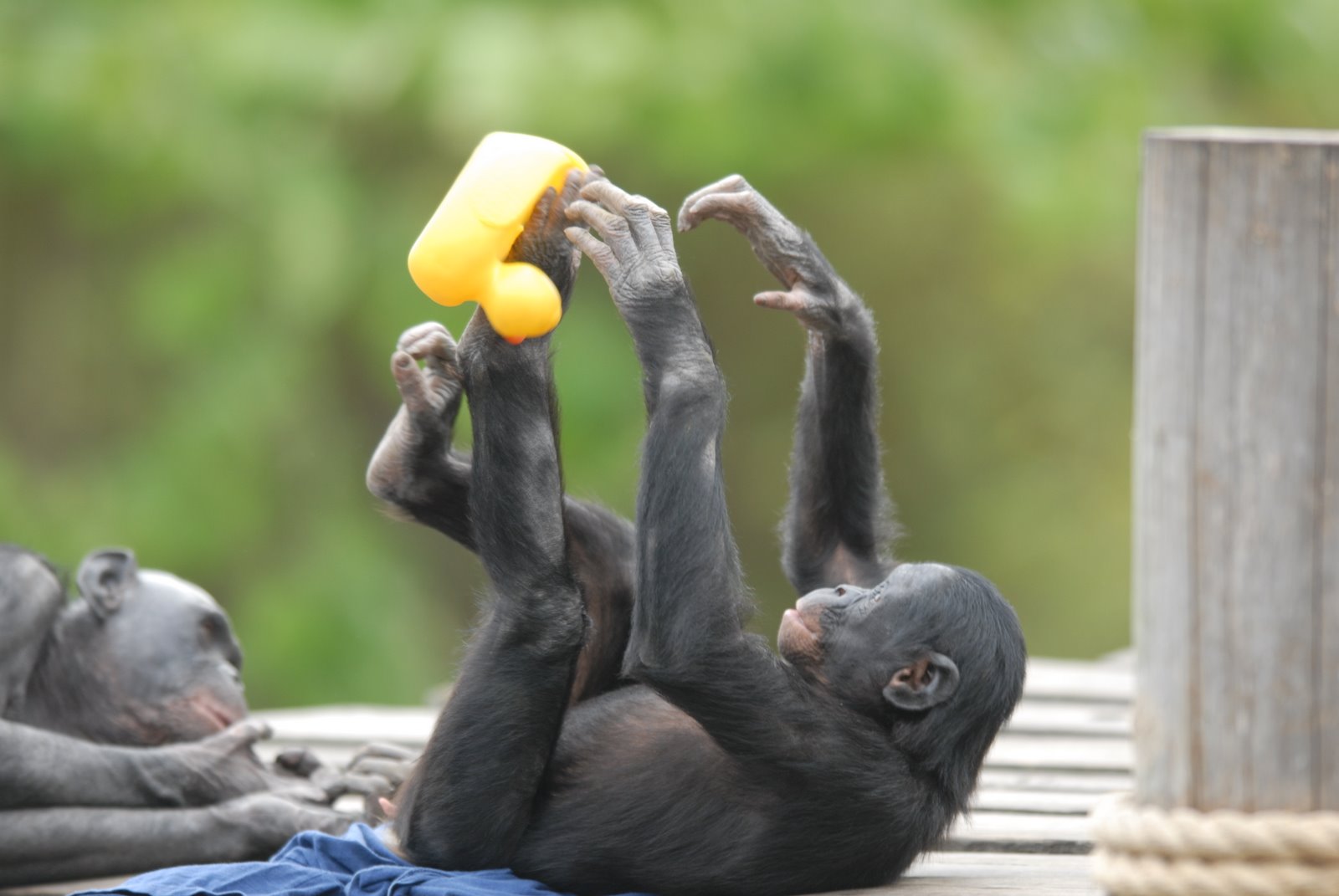
Hands on Bonobo "Exam"


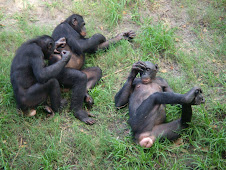
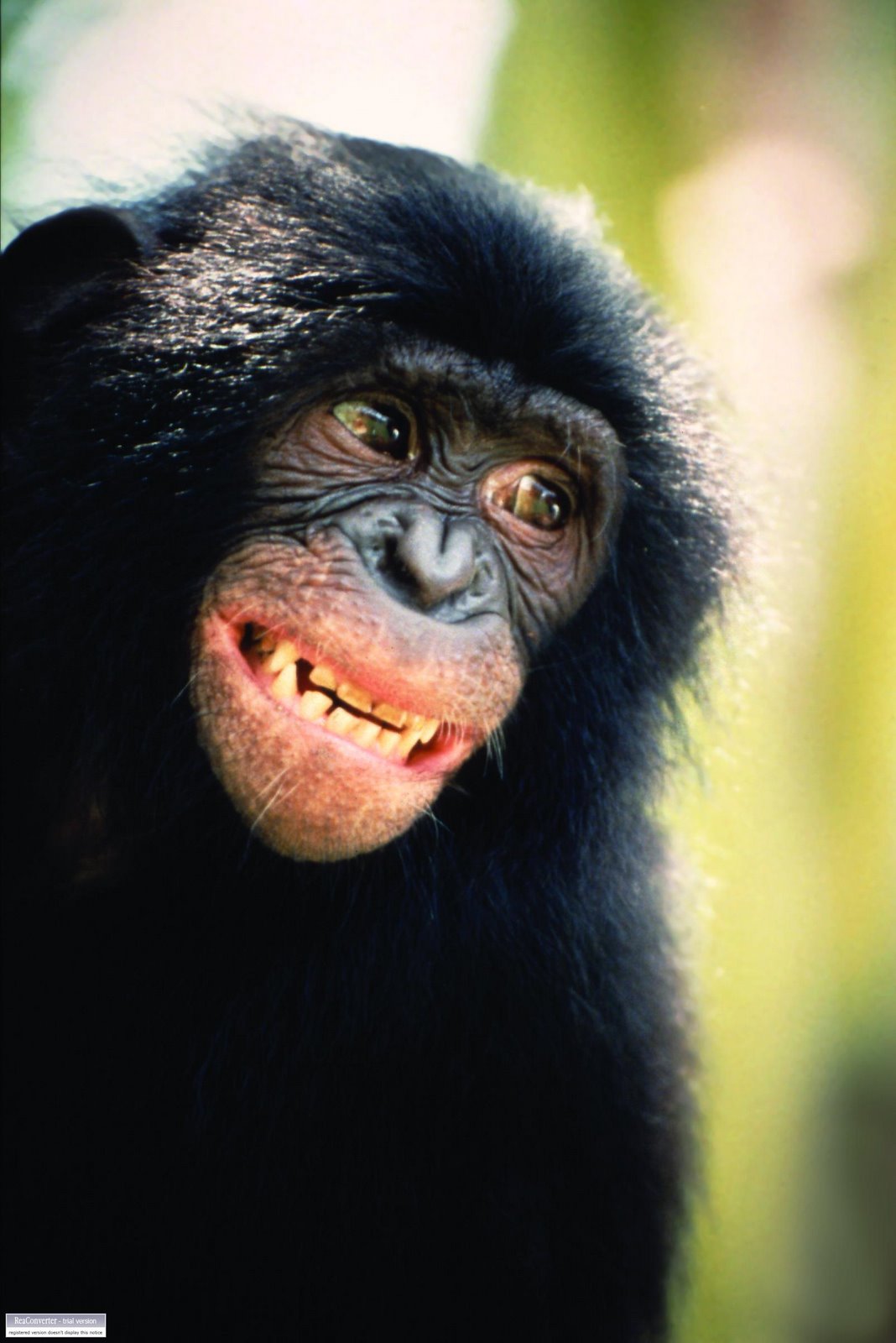
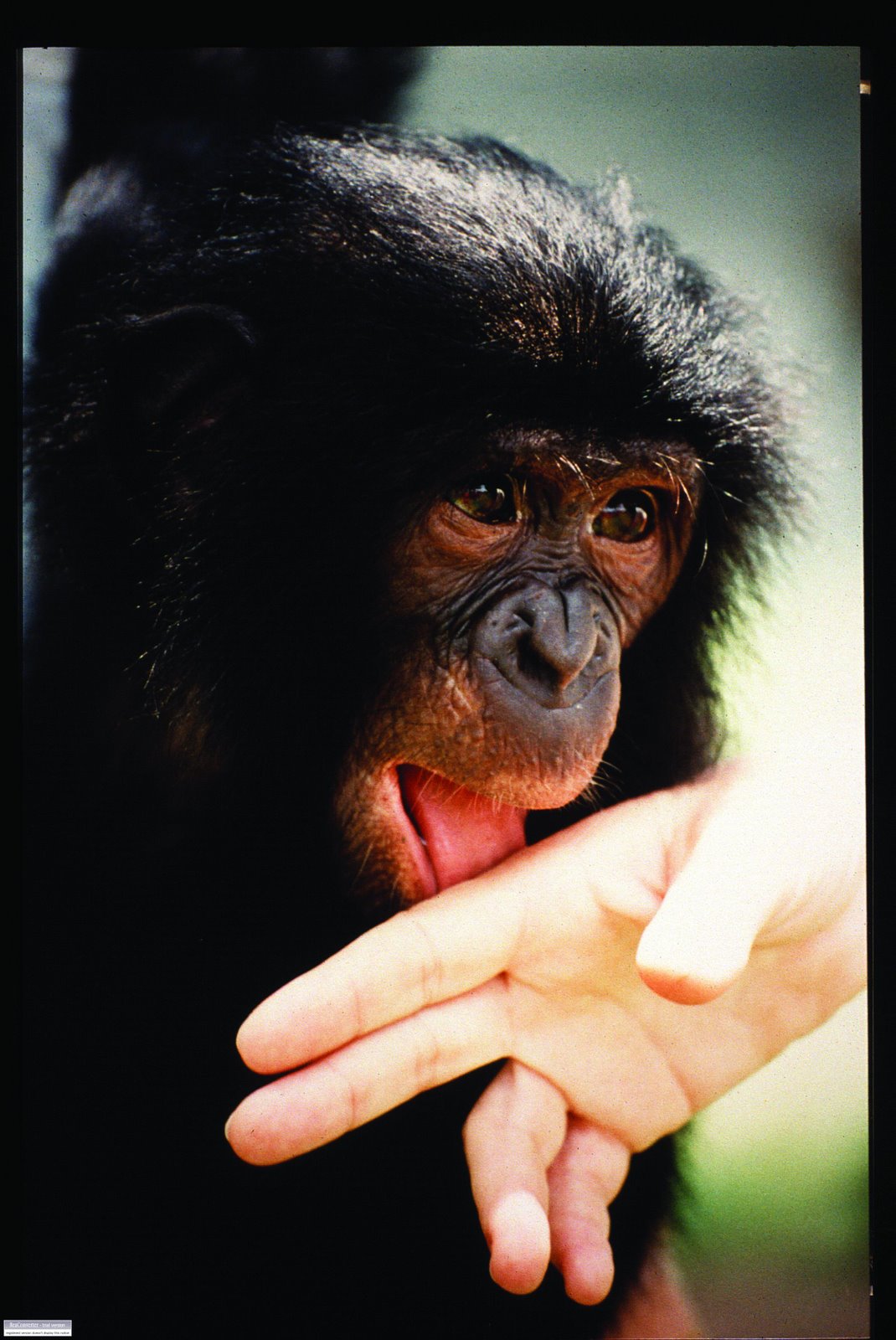
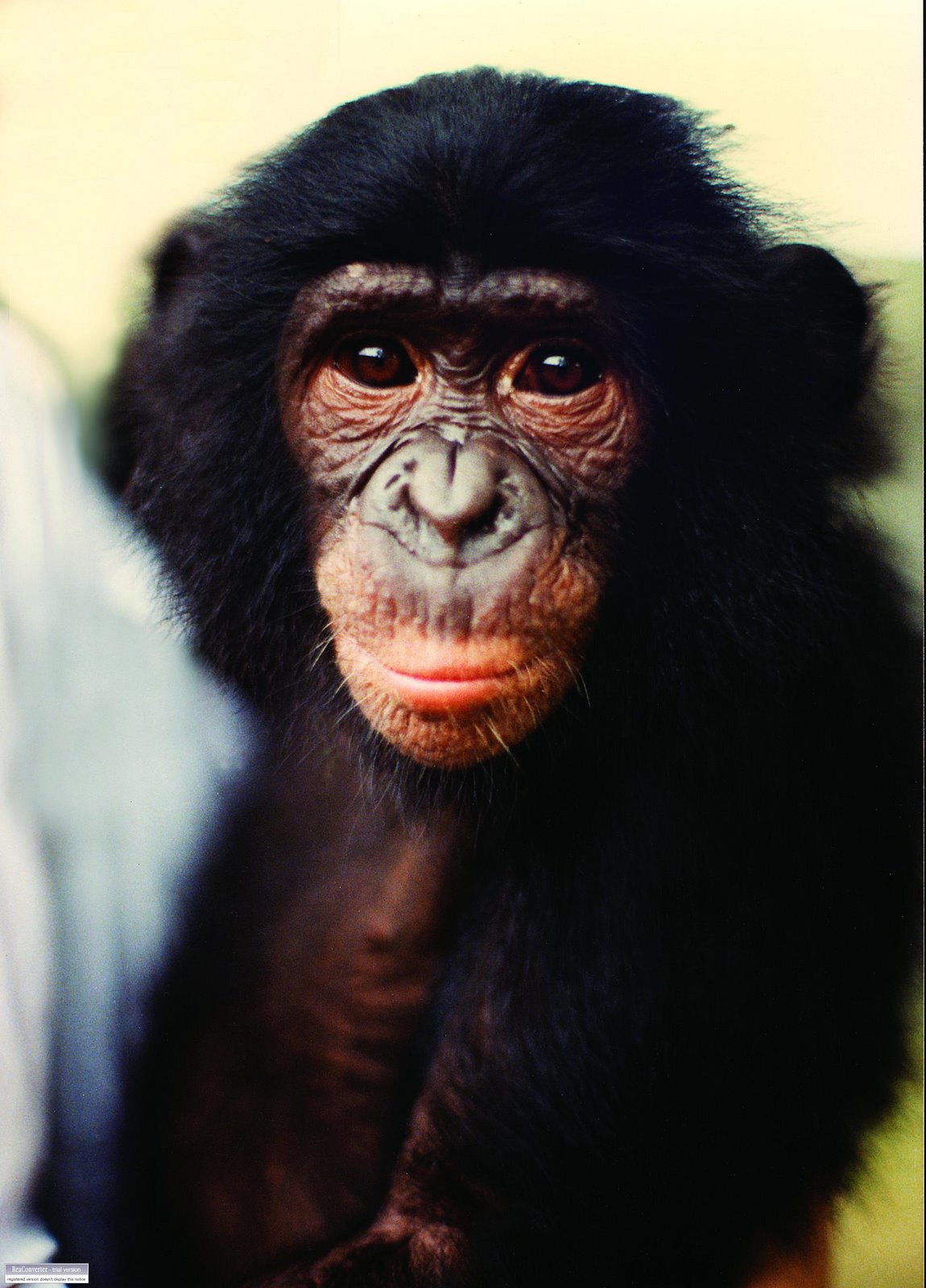
Cooperative participation in medical exams is a primary goal in modern captive ape management. Here, a keeper is focusing on a single bonobo at the Jacksonville Zoo and Gardens. A first "anti-distraction" technique is to train these highly social animals to separate from the group. Once animals understand the challenge of training, they often find it so engaging that they may squeal in delight in anticipation of a turn with the keeper.

The photos show preparation for a cardiac, teeth, mouth, gums, and tongue check. The Zoo's two veterinarians stop in frequently to familiarize the animals with their presence, which is something that is needed for "house calls" from a doctor, with the backup training by the keeper.

Photos by M. Brickner