Search This Blog

Saturday, June 27, 2009

The Challenges of Field Work


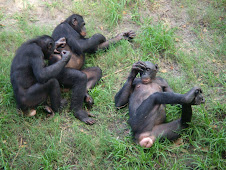
"As we proceed with the Bososandja forest plans, our goal is to organize and fund a large mammal inventory (using a consistent methodology) for the entire Lukenie-Sankuru forest block and the Lusambo forest block. Only with this data can we make an unequivocal case for the importance of protecting a particular area (the Bososandja). This effort will continue to rely on provincial, territorial, and local (groupement, localité) review, as we have done in the past to ensure that they have a say in the process and geographic boundaries. Critical to the process is formal mapping that will assure that authorities (government and traditional) are very clear what we are discussing."

These words, so straightforward, were recently written by Dr. Jo Thompson, who studies bonobos in the Democratic Republic of the Congo. What is not apparent are the physical hardships that are part and parcel of working in the field. One has to deal with slippery log bridges across steams, stinging insects, thorny plants, exhausting days, and lonely nights of solitary work. On the human side, one faces demanding officials, deals with a foreign language and culture, and endures the high costs and unavailability of almost everything. The lack of transportation, communication, and access to health care requires a fearless approach to life. Many may dream romantically about studying wildlife, but few have the ability to do so.

Photo by R. Ross

Wednesday, June 24, 2009

Twin Tree Kangaroos

This photo documents twin Matschie's tree kangaroos sharing their mother's pouch. They were born at the Lincoln Children's Zoo in Lincoln, Nebraska in December, 2008, but poked their heads out of the pouch for the first time in June. One of the fraternal twins (on the left) seems to be to be about one week ahead of the other. He opened his eyes earlier, has more fur, and peaked out of the pouch earlier. The babies weigh only about eight ounces.

Twins are rarely reported in kangaroos, so this double surprise is a welcome success for the Matchie's tree kangaroo that is collectively managed by participating member AZA (American Zoo and Aquarium Association) zoos. The species is found in the rainforests of Huon Peninsula of Papua New Guinea, with perhaps only 2,500 animals left. AZA zoos, led by the Woodland Park Zoo in Seattle are actively involved in tree kangaroo conservation in the wild.

Photo by Lincoln Children's Zoo

Monday, June 22, 2009

At the Zoo

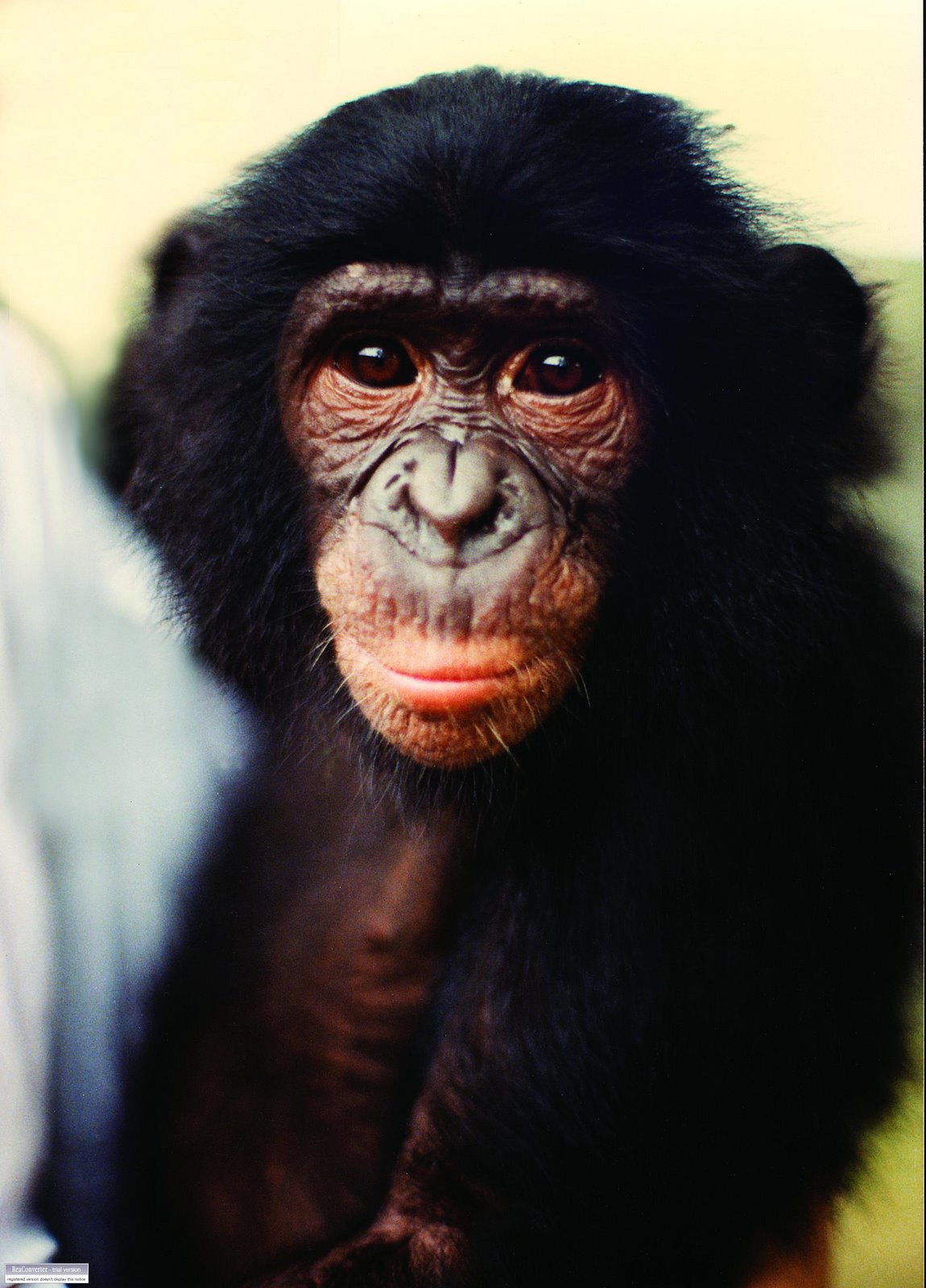
In September 1991, with the eruption of the looting and military mutiny across the capital of Kinshasa, Zaire (now the Democratic Republic of the Congo), 15,000 expatriates fled the country, leaving only a few hundred behind. Robert Weller, a journalist with the Associated Press wrote an article about how I repelled the rioters by painting the word AIDS in sheep's blood on the entrance wall of the compound where I worked and lived. I was shown with a bonobo clinging to my neck -- the reason that I stayed was to protect the animals.

Weller wrote, "But the soldiers who ransacked Kinshasa's stores, businesses and residences for three days in September kept clear of the center until French Foreign Legionnaires arrived to restore order and supervise the evacuations. For anyone who couldn't read her "AIDS" warning, it didn't hurt that Messinger also had a reputation locally as a handler of vipers and pythons. Indeed, when the Legionnaires saw the snakes, they left too."

Saturday, June 20, 2009

Domestication and the Basenji

Along with educating the reader, the children's magazine Bleu/Blanc tried to engender a sense of pride in those things Congolese. Few knew that the tough, quiet, little African hunting dog was a pedigreed breed overseas. In fact, small numbers of village dogs were exported from Zaire (now the Democratic Republic of the Congo) since the thirties. In 1987 and 1988, 19 Basenjis were exported and many of them became foundation stock for the breed.

The story of the Basenji was coupled with an explanation of agriculture and domestication (using a cartoon of a man using his dog Fifi to pull the lawnmower, as a "domestication trial"). A drawing illustrates the pointed ears, forehead wrinkles, short hair, curled tail, and the fact that the breed does not bark.

Wednesday, June 17, 2009

Tropical Agriculture and Monkeypox

Showing behemoth tree skeletons left behind after felling and torching a patch of forest, this photograph illustrates "slash and burn" agriculture. The ash enriched soils support a diverse harvest of corn, peanuts, manioc, yams, beans, okra, peppers, squash, amaranth, and bananas.

One of the interesting facts about monkeypox was that the primary cases were mostly children between five and ten years of age. This is the age of boys too young to hunt who accompanied their sisters and the village women to the fields to work. Besides planting, weeding, chopping firewood and harvesting, they also protected the crop from marauding pests, such as baboons and wild pigs.

To occupy their time, and because they were hungry, the young boys would learn life skills by hunting the small mammals, mostly rodents that lived in the vicinity. Mostly, the captures were made by the clever use of snares, traps, and nets. The catch would be butchered, cooked, and eaten out in the field by the boys and girls. The agricultural areas seemed to be the interface between some animal host carrying the monkeypox virus and humans. What was this animal host?

Photo by D. Messinger

Monday, June 15, 2009

Growing Up Jaguar


The 49th jaguar cub born at the Jacksonville Zoo made his debut on 1 January, 2009, in a hay-bedded, camera monitored den. Staff remotely observed the mother interact with the newborn singleton cub, licking, licking, and licking some more. The reason for the hands-off was that the mother had been wild caught and human reared from a cub in Guyana. Her mothering skills were at first in question, but she proved to be an exemplary parent.

These photographs were taken in an off-exhibit holding yard, where the cub is playing with his mother. In the first, momma still tries to pull him around by the nape of the neck or the head -- she can barely fit her mouth over his broad body. He is about five months old in these images, and like a kitten, his antics are non-stop, punctuated by cat-naps, snuggling with momma, and watching the guests go by. He is also eating an adult meat diet, just like his momma.

Photos by J. Reed