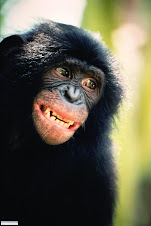
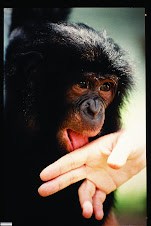
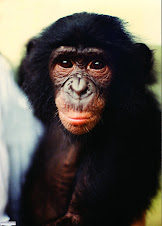
These two Polaroids, taken three weeks apart, show the effects of severe malnutrition on baby bonobos. Taken from their mothers and thus deprived of mother's milk (protein), they develop a kwashiorkor state, with devastating consequences. The body develops edema, or swelling of the tissues. In the upper photo, the animal appears to be fat, and there is puffiness around the eyes. There is anemia, anorexia, and diarrhea.
Almost all of the bonobos that I saw were given plenty of fruit, but no protein, so they had physical signs of kwashiorkor. This disease is difficult to treat because there are serious and often fatal outcomes, from the "refeeding" effect. This is complicated by the fragile psychological state of bonobo infants that have been taken from their mothers and traumatized by their human captors.
The lower photograph shows the emaciated appearance of the bonobo after the edema had resolved. Sadly, she did not survive. In human medicine, there is evidence that the lack of protein in a diet sufficient in calories, (kwashiorkor), is more harmful than an overall lack of calories, (marasmus). Additionally, although a child can be treated and rehabilitiated, there is often permanent damage to internal organs and a retardation of intellectual development.